How Much Should You Pay for Garage Door Repairs in New Jersey
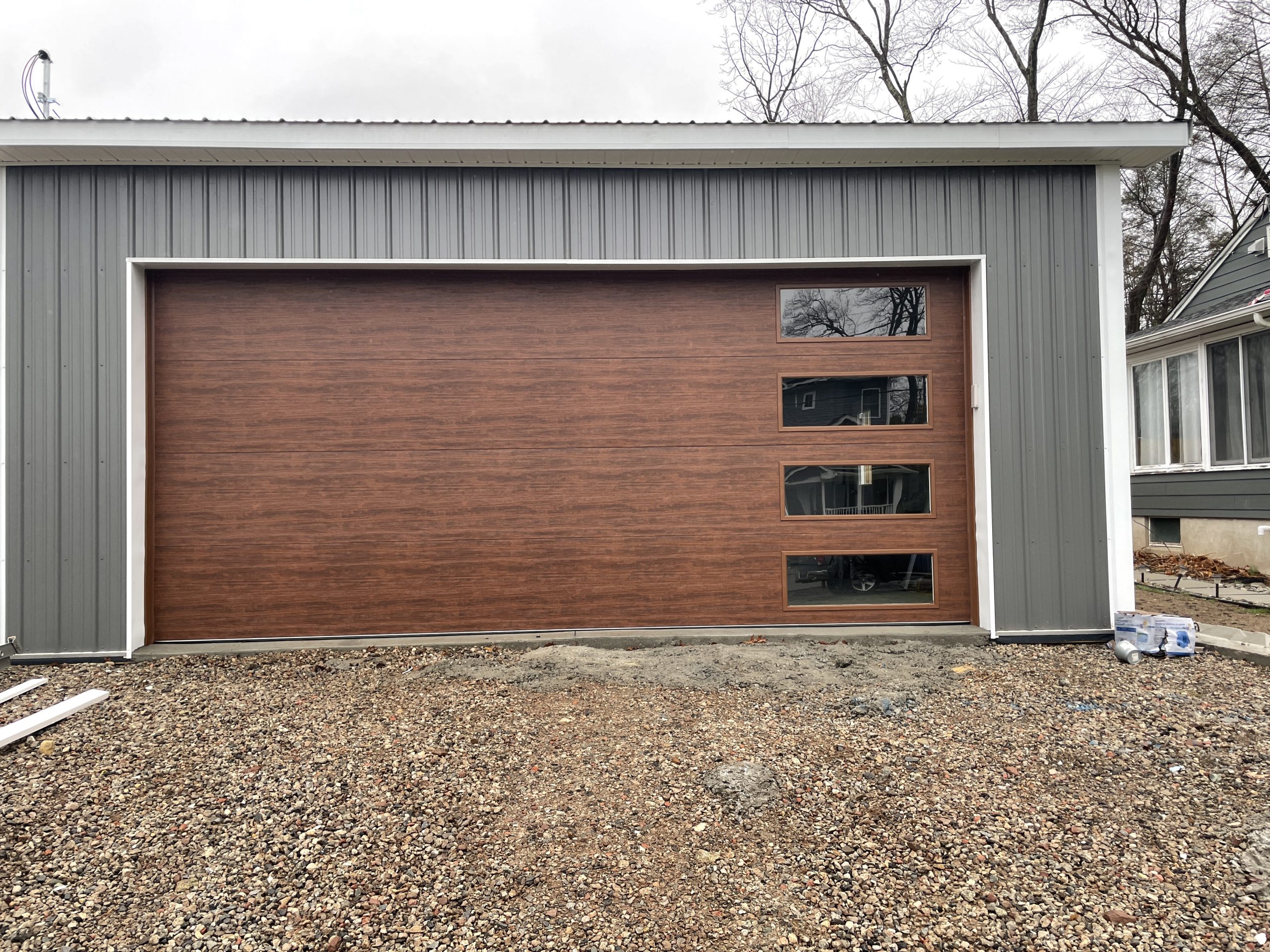
If you have ever called for garage door service after hearing a loud snap, a grinding opener, or a door that suddenly tilts off track, you already know the first question is usually not technical. It is financial. How much is this going to cost me?
That question matters even more in New Jersey, where labor rates, travel fees, housing stock, and weather all shape the price of service calls. A repair in Jersey City does not always cost the same as a repair in Toms River. A basic sensor adjustment in a newer subdivision is a different job from replacing worn hardware on a heavy wood door in an older Bergen County home. The phrase Garage Door Repairs in New Jersey covers a wide spread of pricing because the work itself can vary quite a bit.
Still, there are reasonable ranges. Homeowners should not feel like they are guessing in the dark. Most reputable companies price common repairs within familiar bands, and once you understand what drives the bill, it becomes much easier to judge whether a quote is fair.
What New Jersey homeowners typically pay
For standard Garage Door Repairs, most homeowners in New Jersey can expect a service visit and minor fix to start somewhere around $125 to $250. That lower end usually covers straightforward issues such as sensor realignment, remote reprogramming, tightening hardware, lubrication, or adjusting limit settings. If the technician is there for less than an hour and no major parts are needed, the bill often stays in that zone.
Once parts enter the picture, the number rises. Replacing rollers, cables, hinges, weather seal, or a damaged track section often pushes the total into the $175 to $450 range, depending on the door type and part quality. Spring work tends to sit higher because it involves more risk, more labor, and hardware that must be matched correctly to the door’s weight. A torsion spring replacement often lands between $200 and $500 in New Jersey, and that can go higher for oversized doors or custom setups.
Garage door opener repairs are another category with a wide spread. A simple gear replacement or board adjustment may cost less than $300. A failing motor, carriage assembly, or logic board can put you close to the point where replacement makes more sense than repair. For many opener issues, homeowners see quotes from roughly $150 to $450 for repair, while a full opener replacement often starts above that.
Those are broad ranges, not guarantees. The useful takeaway is this: a fair quote usually reflects the actual failure, the door’s weight and size, the urgency of the call, and the technician’s time. If a company cannot explain the price clearly, that is more revealing than the dollar amount itself.
Why prices in New Jersey can run higher than expected
New Jersey is not a uniform market. Costs are shaped by local economics, travel patterns, and housing conditions. Labor is one of the biggest factors. In denser, higher-cost areas, hourly rates and overhead are naturally steeper. Insurance, vehicles, fuel, warehousing, and payroll all cost more, and those business realities show up in repair pricing.
Then there is the housing mix. New Jersey has plenty of older homes with detached garages, narrow clearances, aging tracks, and retrofitted openers. Those jobs can take longer than a repair on a newer builder-grade setup. A technician may arrive for what sounds like a simple spring swap and find worn bearings, bent brackets, or unsafe previous work that has to be corrected before the door can be put back into service.
Weather matters too. Coastal moisture can accelerate rust. Freeze-thaw cycles can affect alignment, bottom seals, and hardware wear. Salt in the air near the shore is hard on metal components. These are not dramatic factors in a single repair, but over time they contribute to parts failing earlier, especially on doors that have gone years without maintenance.
Emergency timing also changes the number quickly. A weekday appointment during standard hours is one thing. A late-night lockout, a jammed door with a car trapped inside, or a broken spring on a holiday weekend is another. New Jersey companies commonly charge extra for after-hours service, and that surcharge is not unreasonable if it is stated clearly upfront.
The repair itself usually determines the bill
The most important cost factor is not the company’s ad or the neighborhood you live in. It is the nature of the fault.
A door with misaligned safety sensors can often be corrected in minutes. A door with a snapped torsion spring cannot. A noisy opener may need only a proper tune-up, but a door that jerks and shudders might be straining against failing rollers, an out-of-level track, or the wrong spring tension. Problems that seem similar from the driveway can be priced very differently once a technician inspects the system.
This is where experienced judgment matters. Good garage door techs do not just swap the obvious broken part and leave. They look at what caused that part to fail. If a cable frayed because a drum was worn or the door was running unevenly, replacing only the cable is a short-lived fix. That may produce a smaller invoice today, but it is usually a poor value.
On the other hand, not every job needs a major rebuild. Some companies oversell. If the door is structurally sound and the opener is healthy, replacing only the failed component can be the right call. Smart homeowners ask not only, “What does this repair cost?” but also, “What condition are the surrounding parts in, and how long should this fix reasonably last?”
Common repair categories and fair price ranges
A few examples help put real numbers around the issue.
Sensor and photo-eye work is usually among the least expensive service calls. If the sensors are dirty, bumped, or slightly out of alignment, expect a modest bill, often around $125 to $200. If wiring has been damaged or staples pierced the low-voltage line, the repair may cost more.
Roller replacement often falls between $150 and $350, depending on how many rollers are changed and whether nylon or steel parts are used. Homeowners with loud doors often notice a big difference after switching from worn metal rollers to quality nylon rollers with proper bearings.
Cable replacement frequently lands in the $175 to $350 range. If the cable came off because of a spring issue or track problem, the total can climb because the root cause must be handled too.
Track repair can be deceptively variable. A slight bend may be corrected without replacing much. A badly hit or twisted vertical track can turn into a more involved job, especially if brackets are bent or spacing has shifted. That kind of repair might run from around $150 into the $400 range or higher.
Spring replacement deserves special attention because it is one of the most common calls in the state. For a standard torsion spring setup on a residential door, many New Jersey homeowners pay between $200 and $500. Heavier insulated doors, double-wide doors, or specialty systems can cost more. Extension spring setups can sometimes be less expensive, but that depends on configuration and safety hardware.
Opener troubleshooting often begins with the least dramatic causes: settings, sensors, wall control issues, stripped gears, trolley wear, or travel adjustments. These may keep the repair in the $150 to $300 range. But once a logic board or motor assembly is involved, homeowners should compare repair cost against replacement cost carefully. Putting $400 into an aging opener with no battery backup and spotty parts availability is not always a wise use of money.
When a quote is fair, and when it is inflated
Homeowners often focus on whether a quote is high or low. A better question is whether it is complete and transparent.
A fair estimate usually tells you what failed, what is being replaced or adjusted, whether parts are included, whether labor is included, and whether there is any warranty on the work. You should be able to understand why the total is what it is. It does not need to be fancy, but it should be plain.
An inflated quote often has one of two warning signs. Either the technician jumps quickly to full replacement without a clear reason, or the invoice breaks into so many separate fees that the final total no longer resembles the advertised service price. Service call fees, labor minimums, emergency surcharges, disposal fees, and premium parts are not inherently wrong. They just need to be disclosed honestly.
One homeowner I spoke with in Monmouth County had a spring break on a two-car steel door. The first company quoted a figure that seemed low over the phone, but the final price rose sharply after arrival because the technician added charges for both springs, center bearing work, and a “door rebalance package.” A second company https://maps.app.goo.gl/CQhkeFpHxrmk2QxA9 quoted higher initially, but the number included the actual spring pair, labor, balancing, and a warranty. The second bill ended up lower in practice because it was complete from the start. That is common in this industry.
Why the cheapest repair is often the expensive one
It is tempting to shop for the lowest number, especially when the issue appears simple. But garage doors are heavy moving systems. The part that failed is only part of the story.
Take springs as an example. If one spring breaks on a two-spring system, replacing only the broken spring can shave some money off the invoice. Yet if the springs were installed together, the unbroken spring has usually experienced the same cycle count and wear. In many cases, replacing both is the more economical move because it restores balanced lifting and reduces the odds of a second service call a month later.
The same goes for rollers and cables. Replacing one visibly bad roller on an otherwise worn-out set may quiet the door for a week and then leave you with more noise, more strain, and another appointment. Paying a bit more once is often cheaper than paying twice for piecemeal work.
This does not mean every repair should turn into a major overhaul. It means the recommendation should match the door’s age, condition, and expected use. A family that opens the garage six or eight times a day will wear components much faster than someone using a detached garage for storage. Usage patterns matter, and good technicians ask about them.
Repair versus replacement, where the line usually sits
Some garage door problems should be repaired. Others are telling you the system is near the end.
If the door panels are in good shape, the track is sound, and the issue is isolated to springs, cables, rollers, hinges, or sensors, repair is usually sensible. The same is true for many opener issues on relatively modern units.
Replacement becomes a serious conversation when the door has multiple failing components, visible structural damage, wood rot, severe rust, repeated off-track problems, or obsolete opener parts. If a homeowner is stacking one repair after another on a twenty-year-old system, the cumulative cost starts to approach replacement while reliability remains poor.
In New Jersey, full garage door replacement can range widely depending on material, insulation, style, and opener choice. That larger expense makes homeowners hesitate, understandably. But if a repair estimate is already substantial and the rest of the system is tired, replacement may offer better long-term value. The key is not whether replacement costs more today. It is whether repair leaves you with a dependable door for a reasonable period.
Questions worth asking before you approve the work
A short conversation can save both money and frustration. Before authorizing Garage Door Repairs in New Jersey, ask a few practical questions.
- What exactly failed, and what caused it?
- Is this a repair, a temporary fix, or a sign of larger wear?
- Does the price include parts, labor, and service call fees?
- What warranty applies to the repair and the parts?
- If you were fixing this at your own house, would you repair it this way?
That last question is more useful than it sounds. Experienced technicians usually give a more candid answer when you phrase it that way. You are inviting judgment, not just pricing.
How to avoid paying more than necessary
The best way to control repair costs is not aggressive bargaining. It is maintenance and timing.
A door that is inspected, lubricated, and adjusted periodically tends to fail in smaller, cheaper ways. Rollers wear gradually. Hinges loosen over time. Cables show warning signs before they unravel completely. An annual tune-up can catch those issues before they become an emergency with collateral damage.
Homeowners can also help themselves by paying attention to symptoms early. A door that suddenly gets louder, moves unevenly, reverses for no clear reason, or leaves gaps when closed is asking for service. Waiting until the door stops moving entirely usually means a bigger invoice.
If your schedule allows, avoid after-hours service unless the situation is urgent. A jammed door that still secures the house can often wait until the next business day. A trapped vehicle before work on a Monday morning is harder to postpone. Timing affects price, sometimes significantly.
There is also value in getting a second opinion when the recommended repair is expensive and the system is still operable. For a minor issue, that is overkill. For a quote that runs several hundred dollars or veers toward replacement, a second estimate is often worthwhile.
Red flags that should make you pause
Most companies in this trade are straightforward, but not all. Watch for vague pricing, pressure tactics, and explanations that do not add up. If a company advertises one ultra-low fee and then cannot explain why your basic repair somehow tripled, step back.
Be cautious if the technician refuses to show you the failed part or will not demonstrate the issue. You do not need a full mechanical lesson, but you should be able to see the broken spring, frayed cable, stripped gear, or bent track section that justifies the work.
Another warning sign is a recommendation that ignores the actual condition of the door. If every call leads to a pitch for full replacement, regardless of whether the door is five years old or twenty-five, that is sales behavior, not service judgment.
What a reasonable annual budget looks like
For many homeowners, the real question is not a single repair bill but what to expect over time. If your door is fairly modern and in average condition, you may go years with nothing beyond tune-ups and small adjustments. In that case, annual garage door spending may be little or nothing in some years, then a few hundred dollars when parts finally wear out.
For older doors, it is smart to assume occasional repair costs in the low to mid hundreds. Springs, rollers, weather seals, keypads, and opener components are wear items. They are not signs of a bad house. They are normal maintenance issues, especially in a climate like New Jersey’s.
If you have recently moved into an older home and the garage door history is unknown, budgeting a few hundred dollars for catch-up service is prudent. That first visit often reveals neglected maintenance, mismatched springs, or aging safety components that should be corrected.
The bottom line on what you should pay
Most homeowners seeking Garage Door Repairs in New Jersey should expect to pay roughly $125 to $250 for a straightforward service call and minor repair, with many common part replacements landing between $175 and $450. Spring repairs often fall between $200 and $500, and more involved opener work can overlap that range or exceed it if replacement is the better route.
Those numbers are not small, but they are usually fair when the Garage Door Repairs in New Jersey work is done correctly, safely, and with the right parts. Garage doors are one of the largest moving systems in a home. A proper repair is not just about getting the door open today. It is about balanced operation, safety, and avoiding the next avoidable failure.
If a company explains the issue clearly, prices the work transparently, and recommends repairs that make sense for the age and condition of your door, you are probably in the right ballpark. If the quote feels confusing, rushed, or loaded with surprise add-ons, keep looking. In this trade, clarity is often the strongest sign of value.
A.K.K. Garage Doors
Phone number: +19735907183
FAQ About Garage Door Repairs in New Jersey
What is the average cost of fixing a garage door?
The average cost of fixing a garage door ranges from $150 to $350 for most common repairs, with a typical service call fee of $50 to $75. Total expenses depend heavily on the specific broken part and labor rates, which generally run $75 to $150 per hour.
What is the most common garage door repair?
The most common garage door repair is replacing broken torsion or extension springs, which wear out after roughly 10,000 to 15,000 cycles (about 7 years) of opening and closing.
Can a handyman fix a garage door?
Yes, a handyman can fix minor garage door issues like sensor realignments, replacing rollers, or weather-stripping, but major repairs involving high-tension springs or cables are dangerous and best left to a specialized garage door technician.